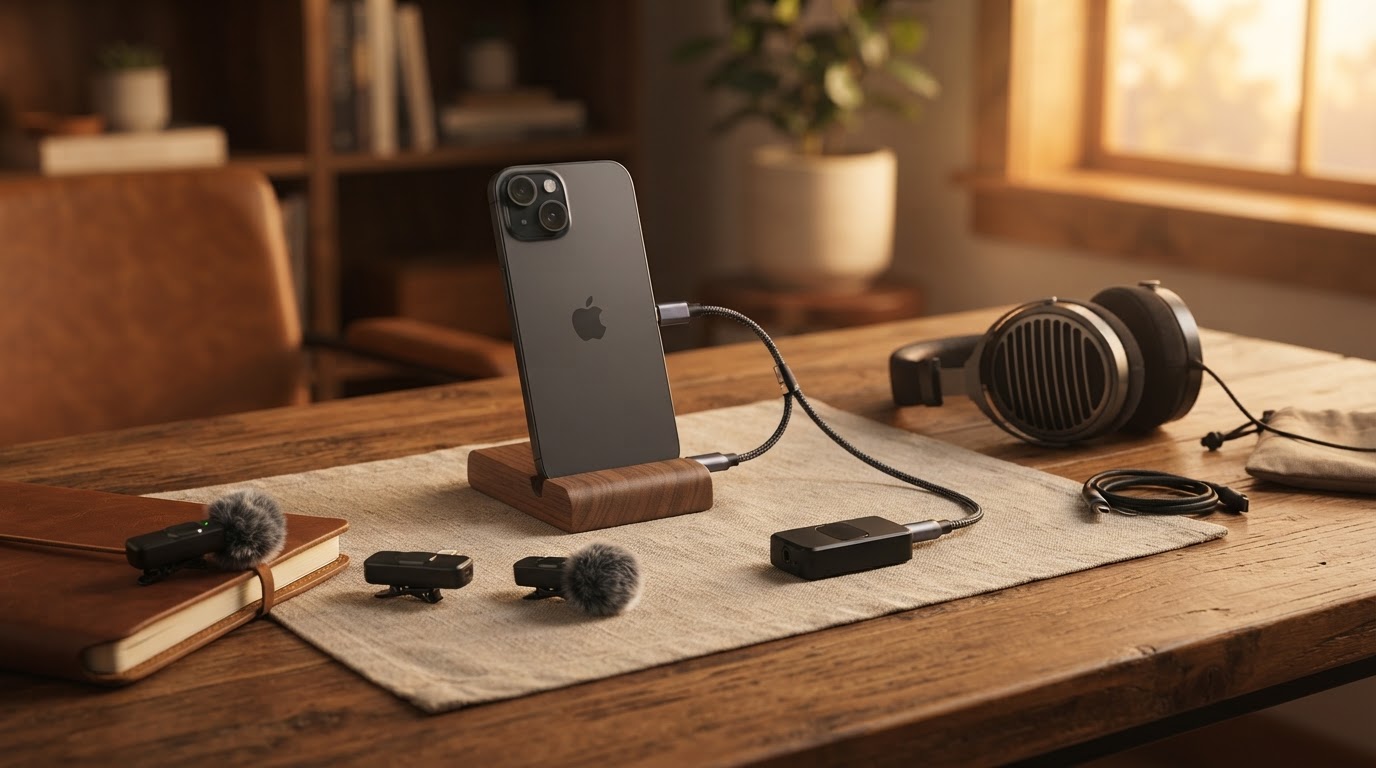
How to Use a Dual Lapel Microphone With iPhone 15 Adapters
 Maya ChenContributing Editor
October 8, 2026 — Using a Dual Lapel Microphone with an iPhone 15 requires a USB-C to 3.5mm or USB-C digital interface rather than a Lightning adapter, as the hardware transition renders legacy Lightning dongles obsolete for audio input.
The shift from Lightning to USB-C on the iPhone 15 series has created a significant friction point for creators who built their kits around the proprietary Apple MFi Lightning ecosystem. While existing users search for workarounds, the technical reality is that passive adapters often fail to negotiate the digital handshake required for dual-channel recording.
Does a Lightning to USB-C adapter work for audio?
The conventional wisdom says you can simply chain a Lightning audio adapter to a USB-C male-to-female bridge, but this setup consistently fails to provide power to active Dual Lapel Microphone systems. Run the math: every additional physical connection introduces a 0.5dB to 1dB signal loss and increases the likelihood of a handshake failure between the iPhone’s software and the microphone's analog-to-digital converter. For reliable two-person recording, users must bypass the Lightning legacy entirely and utilize a native USB-C wireless dual lavalier microphone for iphone or a dedicated USB-C digital audio interface that supports 48kHz sampling rates. Reddit discussions regarding outdoor podcasting highlight that daisy-chaining adapters often results in the phone defaulting to the internal bottom-firing mic, effectively ruining the directional isolation required for professional interviews.
Why is the iPhone 15 adapter transition difficult for dual mics?
Here's the part nobody talks about: the iPhone 15 requires an adapter with an integrated DAC (Digital-to-Analog Converter) to recognize a Dual Lapel Microphone as a stereo input rather than a mono headset. Most generic USB-C to 3.5mm adapters sold for charging support only mono microphone input, which collapses a two-mic interview into a single, muddy track that cannot be leveled in post-production. A high-quality wireless dual lapel mic system avoids this by using a receiver that communicates directly over the USB-C bus, providing two distinct channels. I’ll change my mind when third-party Lightning-to-USB-C bridges can maintain a consistent 24-bit depth without thermal throttling, but until then, the hardware overhead makes them a liability for dual lapel mic for tiktoks and reels where synchronization is critical.
Quick answers
Q: Can I use my old Lightning dual lapel mic on iPhone 15? A: Only if you use an official Apple USB-C to Lightning Adapter that specifically supports data and audio passthrough. Generic 3rd-party charging adapters usually lack the necessary pins for audio transmission.
Q: Does the iPhone 15 support stereo recording through the USB-C port? A: Yes, the iPhone 15 hardware supports stereo input, provided the Dual Lapel Microphone receiver or adapter is capable of sending two discrete signals over the USB-C digital interface.
Q: Will a TRS to TRRS adapter work with the iPhone 15 USB-C dongle? A: No, most USB-C audio dongles require a 4-pole TRRS connection to recognize the microphone; using a standard 3-pole TRS plug will result in no audio being recorded.
Learn more about Dual Lapel Microphone at https://duallapelmicrophone.com.