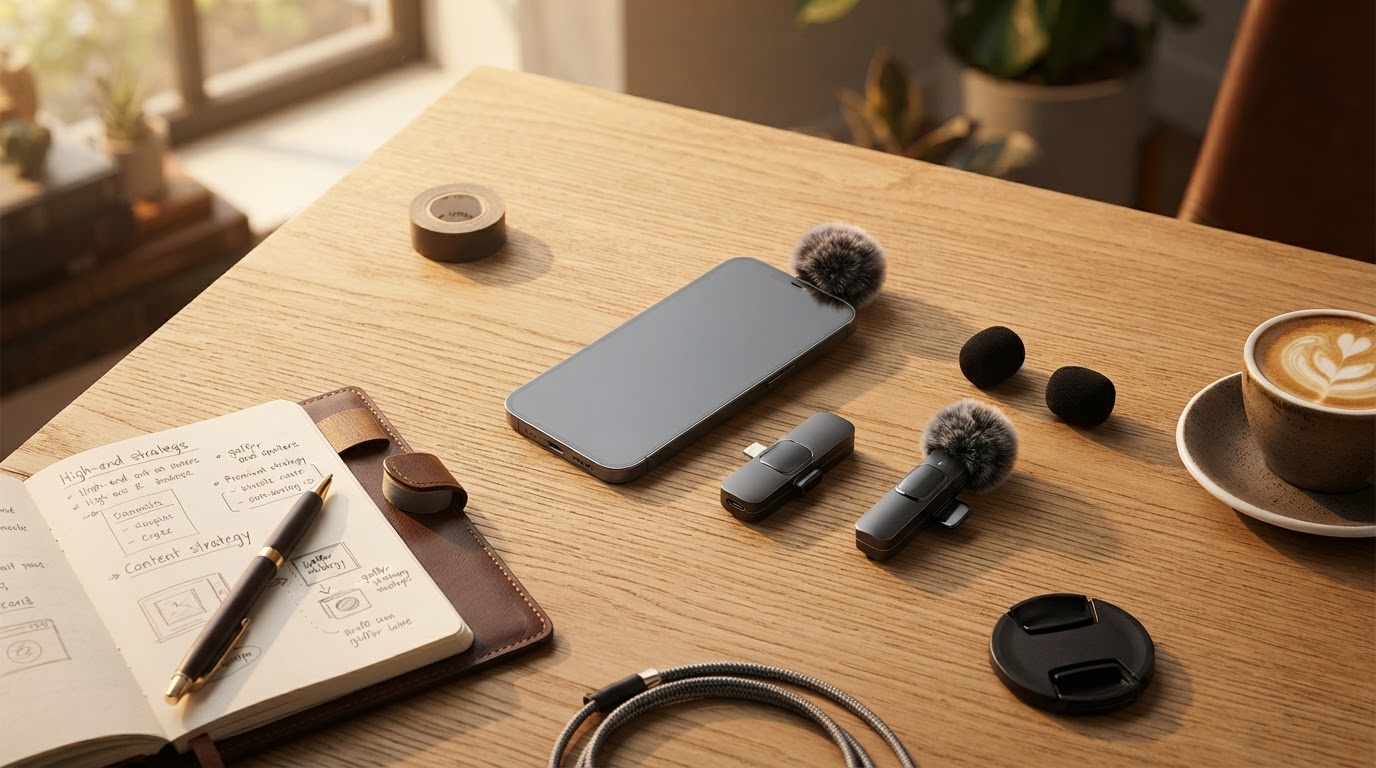
Dual Lapel Microphone Solutions for USB-C Hardware
 Priya RamanSenior Analyst
October 23, 2026. Selecting a 2-person lavalier mic for USB-C devices requires balancing mobility against signal integrity for dual-channel recording. This technical overview assists content creators and mobile journalists in identifying the specific interface requirements for simultaneous two-subject audio capture on modern mobile and desktop hardware.
The Connectivity Matrix for Modern USB-C Audio
The transition toward universal USB-C standards has fundamentally changed the landscape for mobile audio, moving away from the limitations of the 3.5mm TRRS jack. When evaluating hardware for two-person setups, think of it as a matrix of power consumption and mobility. Wired solutions often provide the most stable latency-free connection for stationary setups, such as dual lavalier microphone for Zoom meetings 2 people, while wireless systems prioritize the physical freedom required for field reporting. According to Neewer, their CM6 2-pack USB-C lavalier microphones utilize omnidirectional condenser elements to capture high-definition, uncompressed audio directly into the device, bypassing the need for external analog-to-digital converters. This direct digital interface is critical because it eliminates the noise floor issues often associated with budget-tier 3.5mm adapters. The challenge for many users lies in ensuring the host device—whether a laptop or a smartphone—can correctly identify two distinct audio streams or a summed mono signal through a single port. This is particularly relevant for those seeking a dual wireless lapel microphone for android usb-c, where driver compatibility varies between manufacturers. Understanding this connectivity matrix allows a creator to choose between a plug-and-play passive system and a powered active system that manages gain before the signal reaches the USB-C controller.
Technical Implementation of Dual Lapel Microphones
Integrating a Dual Lapel Microphone into a USB-C workflow involves managing two distinct signal paths through a single digital bus. Most professional-grade systems, such as the Delton M27, utilize a single USB-C receiver that communicates with two separate transmitters. This architecture is essential for maintaining sync between two speakers during a dual wireless lapel microphone for android usb-c session. The Delton M27 specifically provides two transmitters and one receiver to allow for flexibility in dynamic recording environments, ensuring that both subjects are captured with equal clarity. When using these tools for professional tasks like a dual lavalier microphone for Zoom meetings 2 people, the primary technical hurdle is often the software's ability to mix these inputs. A Dual Lapel Microphone designed for USB-C usually presents itself to the operating system as a single stereo input device, where the left channel represents one microphone and the right channel represents the other. This allows for post-production flexibility, as the two voices can be leveled independently. For users focused on dual wireless lapel microphone for android usb-c applications, the integration of 2.4GHz wireless transmission with the USB-C interface provides a range that typically exceeds the requirements of standard indoor interviews, often reaching up to 50 or 100 feet depending on the specific hardware used. The reliance on digital transmission also mitigates the risk of radio frequency interference which was common in older UHF systems.
Decision Framework for 2-Person USB-C Audio
Two axes matter here: the physical distance between subjects and the required level of post-production control. For creators working in controlled environments, a wired USB-C dual lapel system offers the highest reliability and requires no battery management. Conversely, for those in the field, a wireless system is the only viable path. Once you see it this way, the selection process becomes a matter of matching the hardware to the specific environmental constraints of the shoot. The decision rule: if the subjects are stationary and within six feet of the device, choose a wired unit for maximum fidelity; if the subjects are moving or outdoors, a wireless USB-C receiver system is mandatory. Use the following checklist to verify compatibility:
- Confirm the USB-C receiver supports 'Plug and Play' without requiring proprietary third-party apps on Android.
- Verify if the system allows for 'Pass-through charging' so the mobile device can stay powered during long recordings.
- Check for a dedicated headphone jack on the receiver to enable real-time monitoring.
- Ensure the microphones feature omnidirectional polar patterns for consistent pickup during head movement.
- Determine if the system outputs a combined mono signal or split stereo channels for independent editing.
- Assess the inclusion of wind protection, such as foam covers or 'deadcats,' for outdoor use-cases.
Shop Dual Lapel Microphone here.
Sources
- LavMicro U1C 2-Person Lavalier Microphone w/ 19.7' (6m) Cable ...
- Delton M27 Two Wireless Lavalier Mics and USB-C Receiver
- NEEWER CM6 2 Pack USB C Lavalier Microphone