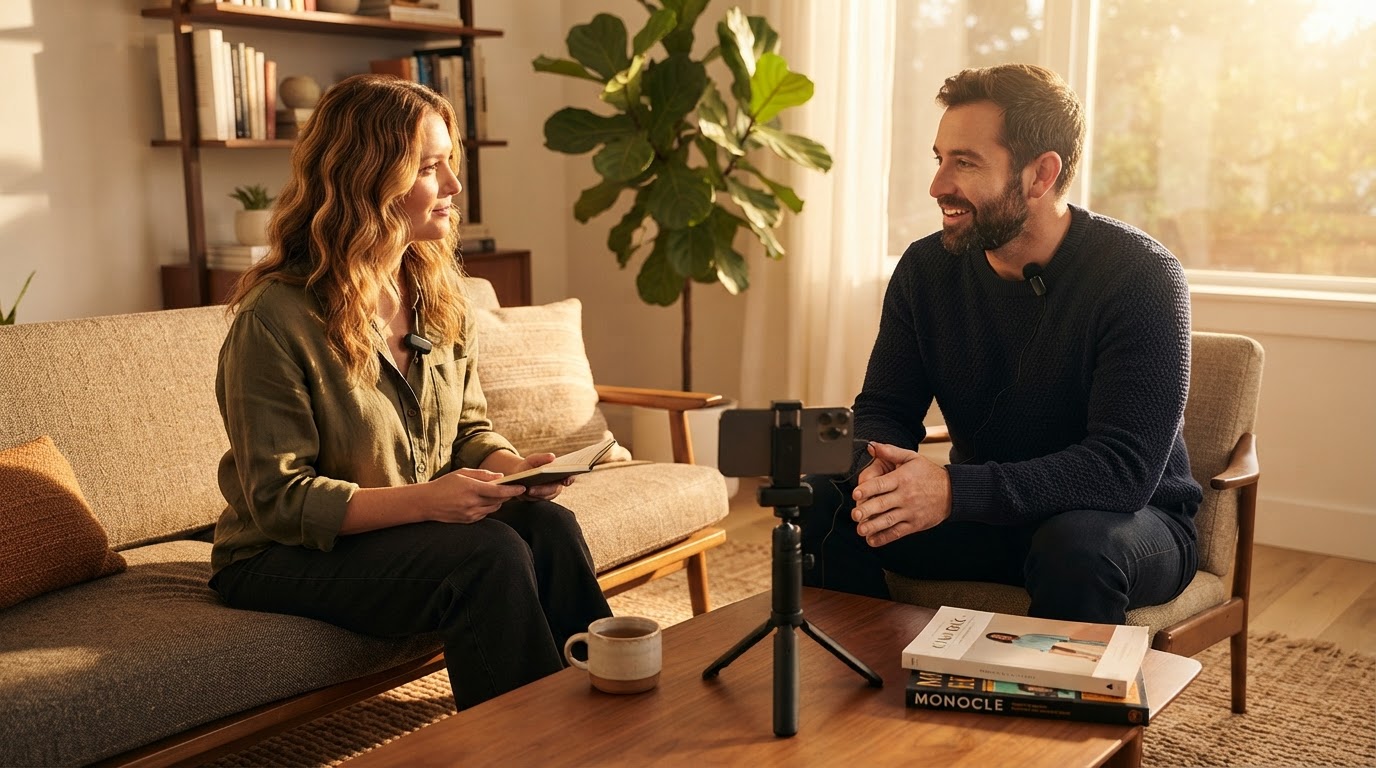
How to Use a Dual Lapel Microphone for Interviews?
 Priya RamanSenior Analyst
October 14, 2026 — Utilizing a Dual Lapel Microphone for interviews involves connecting two independent capsules into a single recording interface to capture balanced dialogue between a host and a guest.
Content creators frequently encounter the challenge of balancing two distinct sound sources without the bulk of traditional boom arms or handheld units. To navigate this, think of it as a matrix of hardware compatibility and spatial acoustics. Managing these variables ensures that the final audio file requires minimal post-production leveling, which is critical for fast-turnaround media environments.
How do you connect two lavalier mics to one camera?
The decision rule for connecting multiple microphones to a single input depends on whether the system is wired or wireless. For wired setups, a Y-splitter or a dedicated dual-head system like the Movo LV2 provides two omnidirectional capsules that terminate into a single 3.5mm jack. This hardware configuration allows a camera or smartphone to recognize both inputs as a unified stereo or summed mono track. According to technical specifications from Movo, these systems are designed to be compatible with both smartphones and DSLR cameras, provided the correct TRS or TRRS adapter is used for the specific recording device.
Two axes matter here: signal path and physical distance. In a wired configuration, the cable length—often reaching up to 20 feet—determines the mobility of the interview subjects. Once you see it this way, the importance of cable management becomes clear; securing the wires to the subjects' clothing prevents friction noise, also known as microphonics, which can ruin an otherwise clean recording. For those transitioning into more mobile formats, understanding [2 person microphone for vlogging](/blog/2-person-microphone-for-vlogging) setups can help bridge the gap between static seated interviews and active movement.
What are the best settings for dual mic interviews?
Achieving professional results requires precise gain staging and placement to prevent one speaker from overpowering the other. The primary objective is to maintain a consistent signal-to-noise ratio across both channels, which often necessitates independent gain control if the hardware supports it. In high-interference environments, experts on the Rode Wireless Go II and DJI platforms suggest that digital wireless systems are often preferred for their ability to manage frequencies and reduce ambient background noise automatically. A discussion within the professional audio community on Facebook highlights that using handheld dynamic cardioid mics or high-end wireless lapel systems is essential when interviewing in loud public spaces to isolate the voice from the surroundings.
Placement is the second critical dimension. The microphone should be clipped approximately six to eight inches below the chin, centered on the chest. This distance minimizes "plosives"—the harsh air blasts from letters like 'P' and 'B'—while maintaining a full-bodied vocal tone. If you are recording for visual platforms, integrating these technical settings with [dual mic strategies for youtube interviews](/blog/dual-mic-strategies-youtube-interviews) ensures that the audio quality matches the visual production value. Proper gain staging ensures that even if one speaker is significantly louder than the other, the recording remains within the 6dB to 12dB headroom range, avoiding digital clipping.
Quick answers
Q: Can I use a dual lapel microphone with an iPhone 15? A: Yes, but it requires a USB-C adapter or a native USB-C dual wireless receiver. Since the iPhone 15 transitioned away from Lightning, users must ensure their Dual Lapel Microphone interface supports the digital audio standard of the new port.
Q: How do I stop two microphones from picking up the same person? A: This is known as phase interference or "bleed." To minimize this, maintain the 3-to-1 rule: the distance between the two microphones should be at least three times the distance from each microphone to its respective speaker's mouth.
Q: Is a wired or wireless dual lapel microphone better for interviews? A: Wired systems like the Movo LV2 are generally more affordable and don't suffer from battery failure or RF interference. However, wireless systems are superior for [dual clip on microphone for youtube vlogging](/blog/dual-clip-on-microphone-youtube-vlogging) scenarios where subjects need to move freely.
Q: What is the benefit of an omnidirectional capsule in an interview? A: Omnidirectional capsules, standard in many dual lapel kits, pick up sound from all directions (360 degrees). This makes them more forgiving if a guest turns their head away from the microphone during a natural conversation.
Learn more about Dual Lapel Microphone at https://duallapelmicrophone.com.
Sources
- LV2 | Double-Lavalier Omnidirectional Microphone - Movo
- Lapel microphone set review. Using lav mic for dual interview - YouTube
- What are good wireless lapel microphones for phone interviews?