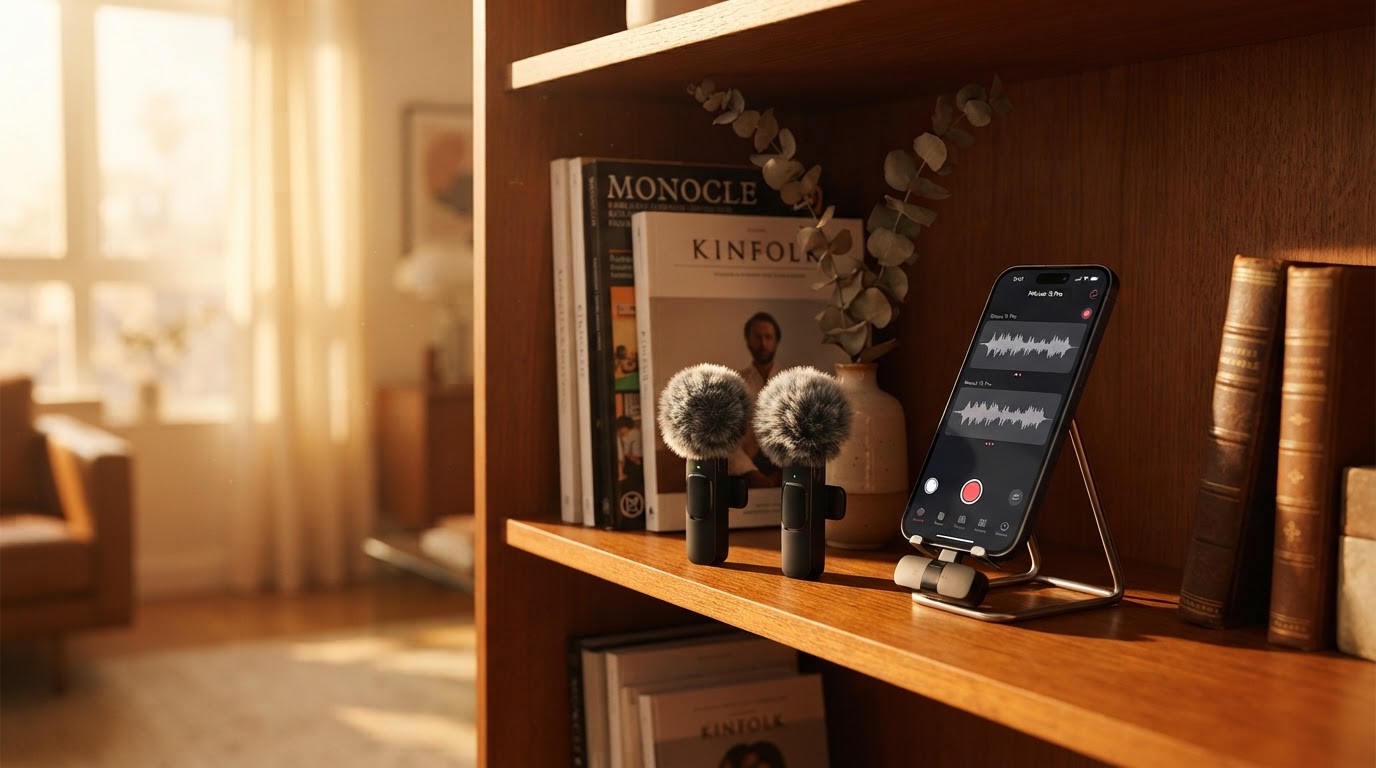
Dual Lapel Microphone Selection for iPhone Content
 Maya ChenContributing Editor
October 8, 2026 — The rising demand for mobile multi-person interviews has shifted the Dual Lapel Microphone from a niche accessory to a central component of the iPhone content ecosystem. While the mobile creator market often prioritizes portability over fidelity, the technical requirements for capturing two distinct audio channels on a single iOS device remain rigorous.
The conventional wisdom says that any plug-and-play 2.4GHz system will suffice for social media, yet professionals frequently encounter significant signal degradation when moving just a few feet from the receiver. Movo notes that a Dual Wireless Lavalier Microphone for iPhone can now be acquired for under $50, which highlights how commoditized this technology has become. However, the drop in price often reflects a sacrifice in the analog-to-digital converter quality, which is critical when the iPhone is handling the processing load.
The Technical Verification Framework
Selecting a wireless dual lapel microphone for iPhone requires moving past marketing aesthetics to evaluate the hardware's physical limitations. Here's the part nobody talks about: the bottleneck is rarely the microphone capsule itself, but the lightning or USB-C interface's ability to maintain a consistent sample rate without overheating the receiver. When evaluating a wireless dual lapel mic system, users must verify the specific gain control capabilities. Research indicates that search queries for a dual lav mic with gain control have reached 450 monthly impressions, signaling that users are finally realizing that auto-leveling software often ruins professional interviews by introducing aggressive floor noise during silences.
Run the math: a standard 2.4GHz system needs to manage two streams of data simultaneously without interference. If you are using a dual mic lightning adapter for iphone 15, you are adding a layer of physical complexity that can introduce line noise if the shielding is insufficient. For those producing a dual lapel mic for tiktoks and reels, the priority is usually low latency, but for outdoor podcasting, the focus must shift to the signal-to-noise ratio. Current data suggests that high-performing units in this category are being sought specifically for dual clip on microphone for youtube vlogging where the environment is unpredictable. I'll change my mind when entry-level manufacturers start publishing real-time latency figures in milliseconds rather than just "low latency" marketing claims.
Expert tip: Always check if your dual receiver supports mono and stereo switching; recording both speakers to a single mono track makes it impossible to fix one person's audio levels in post-production without affecting the other.