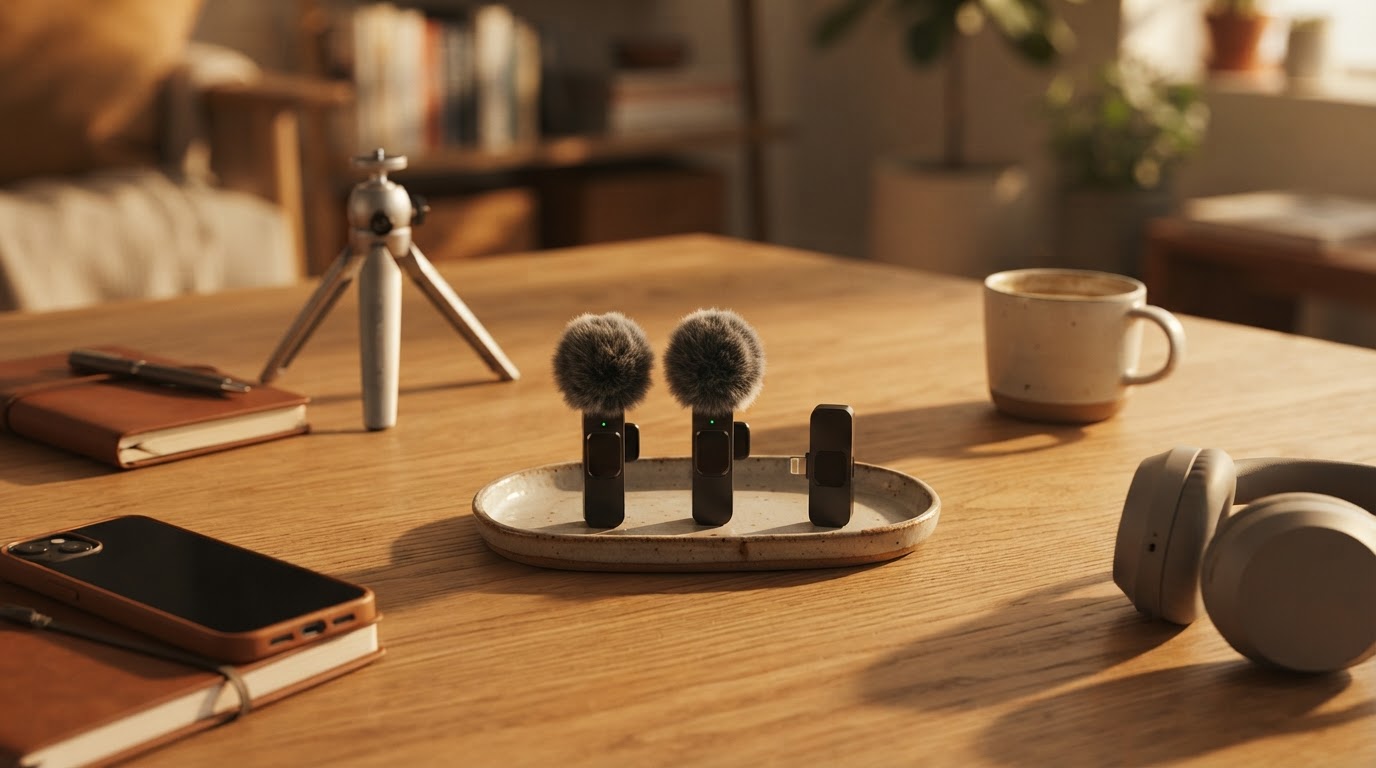
Optimizing Dual Lapel Microphone Audio for TikTok and Reels
 Maya ChenContributing Editor
October 8, 2026. This analysis examines the technical necessity of dual-channel audio capture for short-form social media creators. It is intended for producers and creators who prioritize retention metrics over aesthetic gear trends.
The Audio Retention Crisis in Vertical Video
The conventional wisdom says that viewers will forgive poor lighting but never poor audio. While that sentiment is frequently repeated, the data behind social media algorithms suggests a more aggressive reality: audio quality is a direct signal for watch-time retention. On platforms like TikTok and Instagram, where the first three seconds determine the reach of a post, ambient noise and echo are immediate triggers for a swipe-away. According to Mojogear, a compact wireless lavalier microphone is the best choice for most TikToks and Reels because it places the capsule close to the sound source, effectively neutralizing the inverse square law of sound—where doubling the distance from a mic reduces the sound pressure level to one-fourth.
Creators often rely on a single shotgun microphone or the internal hardware of a smartphone, assuming that software-based noise reduction will fix the output in post-production. This is a technical fallacy. Software can strip away background hum, but it cannot restore the frequency response lost when a speaker is three feet away from a phone. When a second person enters the frame for an interview or a collaborative skit, the problem doubles. Without a dedicated wireless dual lapel mic system, the secondary speaker is relegated to a muddy, distant signal that forces the listener to strain. In the competitive landscape of the 'For You' page, making your audience work to hear you is a guaranteed way to kill your engagement rate. The industry consensus suggests that gear doesn't matter as much as storytelling, but I reject that notion when the gear in question—specifically a dual-channel setup—is the only thing keeping your dialogue intelligible in a loud outdoor environment.
Technical Advantages of Dual Lapel Microphones
Here's the part nobody talks about: mono-summing two speakers into a single track is a nightmare for professional-grade Reels. A Dual Lapel Microphone solves this by providing independent gain control for each channel. If one creator is a loud projector and the other is soft-spoken, a standard single-input setup will either clip the loud voice or lose the quiet one in the noise floor. Research into 32-bit float recording by Think Media indicates that while high dynamic range recording is the future, current mobile workflows still benefit most from hardware-level gain management. Using a [dual mic lightning adapter for iphone 15](/blog/dual-mic-lightning-adapter-for-iphone-15) or a native USB-C receiver allows the phone to treat the two microphones as distinct inputs, ensuring that both voices are balanced before the file ever hits your editing software.
Run the math: if you spend four hours filming a high-production Reel and the audio from your guest is unusable due to wind interference, you haven't just lost a clip; you've lost the ROI on your time. Modern dual systems utilize 2.4GHz digital transmission which, while prone to line-of-sight issues, offers a much higher bit rate than the compressed Bluetooth audio found in consumer earbuds. This is particularly relevant for creators using a [wireless dual lavalier microphone for iphone](/blog/wireless-dual-lavalier-microphone-for-iphone) to film 'man on the street' interviews. The ability to clip a microphone directly to the lapel ensures the signal-to-noise ratio remains high, even if a bus drives past during the recording. Furthermore, for those using newer hardware, the transition to a dual mic lightning adapter for iphone 15 ensures compatibility with the latest mobile architecture, preventing the signal degradation often seen with cheap analog-to-digital converters. For those filming longer-form content or podcasts that are later clipped for social media, the stability of a wireless dual lapel mic system provides the necessary redundancy to ensure that a single battery failure doesn't ruin the entire session.
Strategic Framework for Dual Audio Capture
Choosing a microphone system based on brand name or influencer endorsements is a mistake. Instead, creators should evaluate hardware based on the specific constraints of vertical video production. As noted by Kraftgeek in their review of the DJI Mic 3, a dual-channel system that records two people simultaneously is the baseline for professional content. If your system doesn't allow for discrete channel recording—where Speaker A is on the Left channel and Speaker B is on the Right—you are limiting your ability to fix mistakes in post-production.
Before purchasing a Dual Lapel Microphone for your next project, verify the following technical requirements:
- Discrete Channel Output: Ensure the receiver can output two separate signals rather than a forced mono mix.
- Real-time Monitoring: The receiver must have a 3.5mm jack for headphones to catch interference before it's baked into the recording.
- Gain Control: Look for hardware that allows at least 12dB of adjustment on the transmitter itself.
- Charging Case Integration: For TikTok creators on the move, a system that recharges the units in the box is non-negotiable for long shoot days.
- Wind Protection: High-density 'deadcat' windshields are required; foam covers are insufficient for outdoor Reels.
Shop Dual Lapel Microphone here
Sources
- I Tested 36 Wireless Microphones... Here Are The Best! - YouTube
- Which microphone do you need for TikTok, Reels, or vlogging?
- 9 Best Wireless Lavalier Microphones for Content Creators In 2026