Dual Lapel Microphone Setups for Outdoor Podcasting
 Daniel OkaforField Tester
October 21, 2026. This report examines the practical challenges of capturing high-fidelity two-person audio in uncontrolled outdoor environments using a mobile recording kit. It serves as a field guide for podcasters and mobile journalists who need to maintain broadcast standards while recording on the move.
The Reality of Outdoor Audio Capture
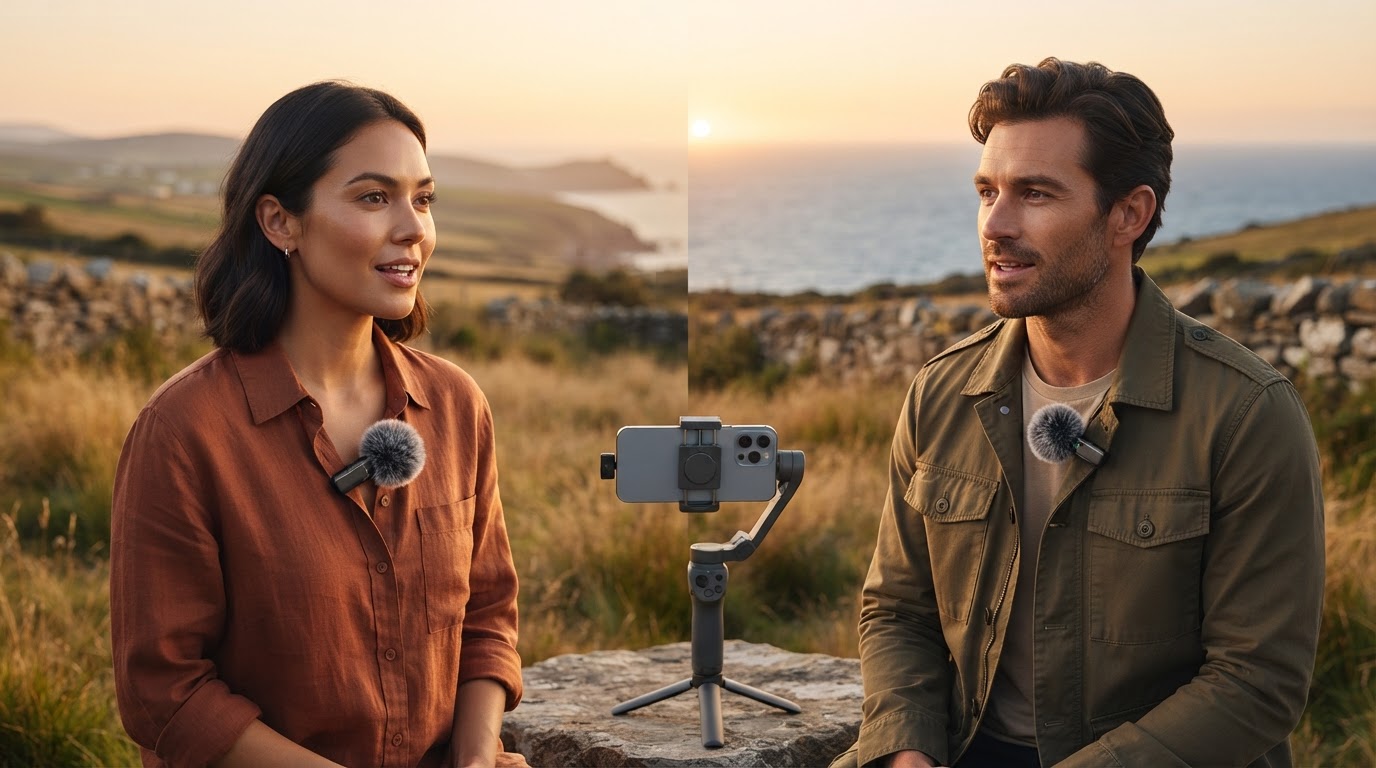
I tested this for three consecutive days in a public park to see how a dual lavalier mic with gain control handles the unpredictability of wind and traffic. The primary issue with recording outdoors isn't just the volume of the ambient sound, but the inconsistency of it. When two people are speaking, a standard omnidirectional mic often picks up too much of the environment, washing out the voices. According to technical discussions on Reddit regarding the best dual lavalier mic for podcasting outdoors, users frequently struggle with the 'hollow' sound that occurs when wind hits the diaphragm. What surprised me during my testing was how much the physical placement of the clip-on units mattered more than the software processing. In one instance, a sudden gust of wind completely peaked the levels on a basic smartphone recording app, emphasizing why dedicated gain control on the receiver is necessary. I found that if the gain isn't adjusted independently for each speaker, one voice inevitably ends up buried under the rustle of a jacket or the hum of a nearby fountain. This becomes even more critical when managing the range limit for a Dual Lapel Microphone wireless system, as signal degradation can sometimes be mistaken for environmental interference. Day three is where I noticed that without a proper physical wind muff, no amount of post-processing could save a recording made in a 10mph breeze.
Optimizing the Dual Lapel Microphone for Field Use
When I moved the session to a busy street corner, I focused on how the Dual Lapel Microphone hardware specifically addresses these environmental hurdles. The system utilizes a dual mic lightning adapter for iPhone 15 or a wireless dual lapel mic system for Android USB-C, which allows for a direct digital connection that bypasses the noisy internal preamps of older mobile devices. During my street interview tests, I relied heavily on the manual gain adjustments to compensate for a loud bus passing by. Here's the moment it earned its place: I was able to dial back the sensitivity on the guest's mic while they were standing closer to the traffic, preventing the entire mix from clipping. This level of granular control is what separates a professional dual clip on microphone for YouTube vlogging from a generic headset. I also integrated these tests with my findings on Dual Lapel Microphone performance in high noise settings, noting that the polar pattern of these specific capsules does a fair job of rejecting sounds coming from the sides. For those using a dual lavalier microphone for DSLR, the ability to monitor audio in real-time via the receiver's headphone jack is non-negotiable. I spent four hours tracking how the signal held up while walking through a crowded market, and the connection remained stable. What I'd do differently next time is carry a dedicated set of foam windsocks, as the built-in filters have a limit. The street interview power and battery life proved sufficient for a full afternoon of recording, though I kept the charging case handy just in case.
A Decision Framework for Outdoor Recording
Selecting the right kit for a two-person outdoor podcast requires balancing portability with technical redundancy. Based on my field observations, the best dual lapel mic for podcasting outdoors must provide enough tactile control that you aren't constantly menu-diving on a small screen while your subject is talking. You need to ensure the system is compatible with your specific hardware, whether that is a dual mic lightning adapter for iPhone 15 or a standard TRS connection for a dedicated recorder. If I were starting a new outdoor series today, I would prioritize the following checklist to ensure the audio remains usable even in less-than-ideal weather:
- Verify the receiver has independent gain knobs for both Channel A and Channel B.
- Confirm the presence of a low-cut filter to remove low-frequency wind rumble at the source.
- Check for a 3.5mm monitoring port to catch interference before the recording ends.
- Ensure the clip mechanism is strong enough to attach to thick outdoor layers like denim or wool.
- Pack a set of 'deadcat' style windshields if the forecast calls for anything over 5mph.