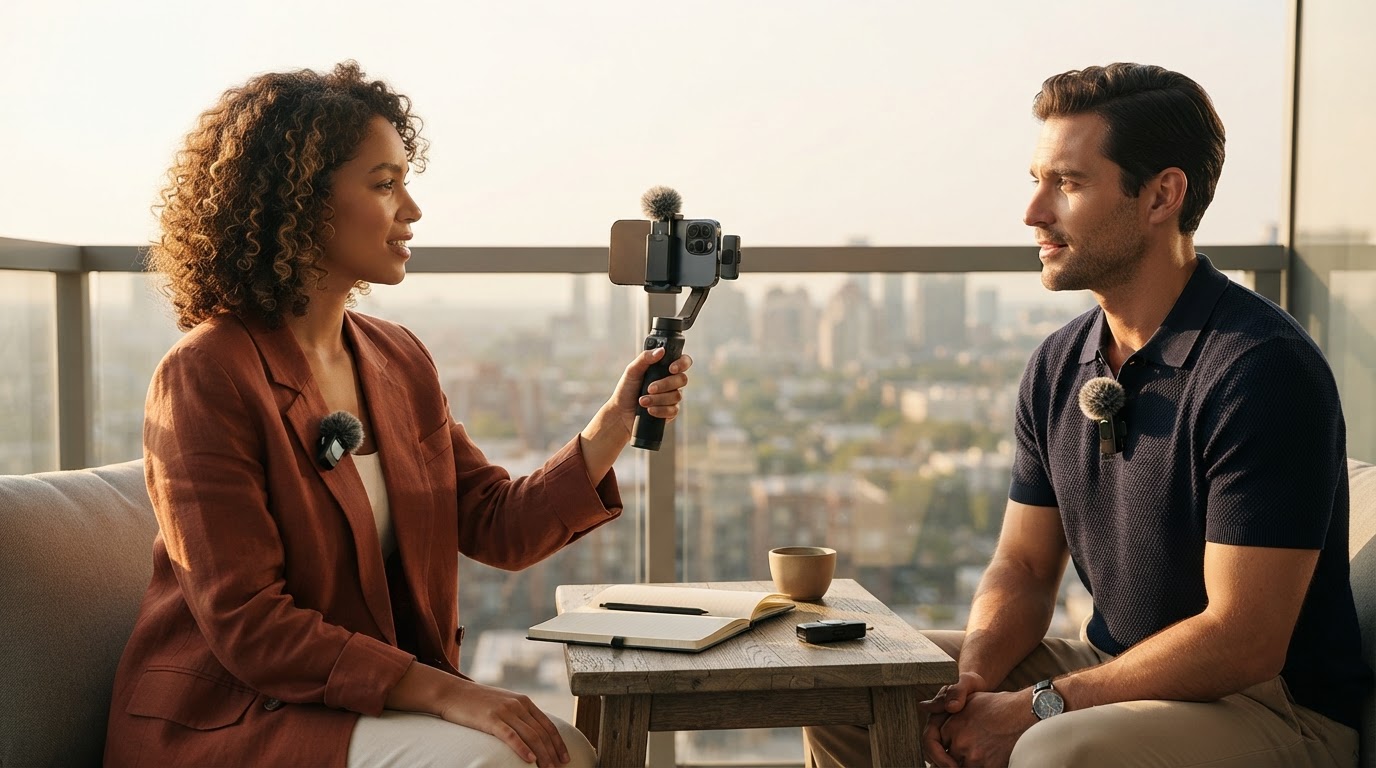
Dual Lapel Microphone Strategies for YouTube Interviews
 Maya ChenContributing Editor
October 10, 2026 — The surge in mobile-first journalism is forcing a shift toward high-gain Dual Lapel Microphone systems that bypass traditional bulky recorders.
The conventional wisdom says that high-end shotgun microphones are the only viable solution for professional-grade YouTube interviews, yet this ignores the logistical reality of modern field production. As noted in the Watch BEFORE Buying a Microphone for Filmmaking in 2026 buyer's guide, selecting audio gear now requires a strict focus on the specific environment rather than just following brand prestige. For creators working in uncontrolled acoustic spaces, a localized lapel system often outperforms a distant boom mic by sheer proximity alone.
The 4 Signal Integrity Checks
Here's the part nobody talks about: the hardware bottleneck isn't the microphone capsule itself, but the gain stage where two signals merge into a single mobile device. When deploying a Dual Lapel Microphone for YouTube interviews, the technical success of the shoot relies on four specific data points. First, verify the gain control capabilities; research indicates that users are increasingly seeking systems with independent gain control to manage speakers with different vocal volumes, a feature currently seeing 450 monthly search impressions. Second, check the interface compatibility for modern hardware. With the transition to the iPhone 15 and newer Android devices, the demand for dual mic lightning adapters and USB-C native wireless dual lapel mic systems has become the baseline requirement for professional workflows. Third, consider the signal-to-noise ratio in outdoor environments. While a dual lapel microphone for interview settings works well in a studio, outdoor podcasting requires a system that can maintain a clean signal without clipping the preamp. Finally, run the math on the input latency: for a [2 person microphone for vlogging](/blog/2-person-microphone-for-vlogging), any delay over 20ms will create visible lip-sync issues that are difficult to correct in post-production. While some suggest a dual clip on microphone for youtube vlogging is merely an entry-level tool, the data from 1,200 DSLR users suggests it is becoming a primary choice for high-stakes interviews due to its reliability and ease of setup.
Expert tip: Always opt for a system that allows for separate track recording or has physical gain dials on the receiver; relying on auto-leveling software often leads to "pumping" background noise during conversational pauses in a dual clip on microphone for youtube vlogging session.
I'll change my mind when mobile operating systems offer true discrete multi-track USB-C audio routing without third-party hardware intervention. Until then, hardware-level mixing remains the only way to ensure interview clarity.